

Mogadishu (ICRC) – Recent fighting in and around Baidoa, located in Somalia’s South West State, has displaced more than 18,000 people¹. Communities have been forced to flee their homes in search of safety and now face the prospect of further hardship, including heavy rainfall and the risk of flooding due to El Nino.
The Bay and Bakool regions in South West State are among the hardest-hit regions in Somalia, particularly in terms of food insecurity. The ongoing armed conflict which has escalated since March this year threatens to worsen conditions for communities still reeling from the effects of the drought.
With widespread displacement and food shortages and limited access to healthcare due to aid cuts that have resulted in clinic closures, the anticipated rainfall could overwhelm families already struggling to cope.
The International Committee of the Red Cross (ICRC) is working alongside the Somali Red Crescent Society (SRCS) to provide support to affected communities. So far, 527 people injured in the conflict have been transported to nearby hospitals by SRCS volunteer response teams. Conflict and insecurity are the main drivers of displacement in Bay this year. Between July and September, renewed fighting uprooted thousands from their homes, accounting for nearly half of all conflict-related displacements in Somalia for the period. The scale of the armed conflict has been particularly alarming, with towns in the Bay region experiencing levels of violence not seen in recent years.
“Baidoa became a ghost town. Families fled, fearing for their lives. Streets were completely empty and you could see houses damaged by mortar shells,” Mayow Mohamed, head of the ICRC office in Baidoa, said of the aftermath of the fighting in September.
South West State is grappling with a deepening humanitarian crisis. Bay region alone hosts more than half a million displaced people², and nearly 26,000 of them in Baidoa could face severe food insecurity by late December, according to experts who conduct the Integrated Food Security and Phase Classification.
The ICRC continues to urge all parties to take precautions to spare civilians. It also calls for the wounded to be allowed to reach hospitals, for health workers and ambulances to be protected, and for homes and shelters for displaced people to be spared from attack.
So far, the ICRC and SRCS have responded to the humanitarian needs of communities affected by the fighting as follows:
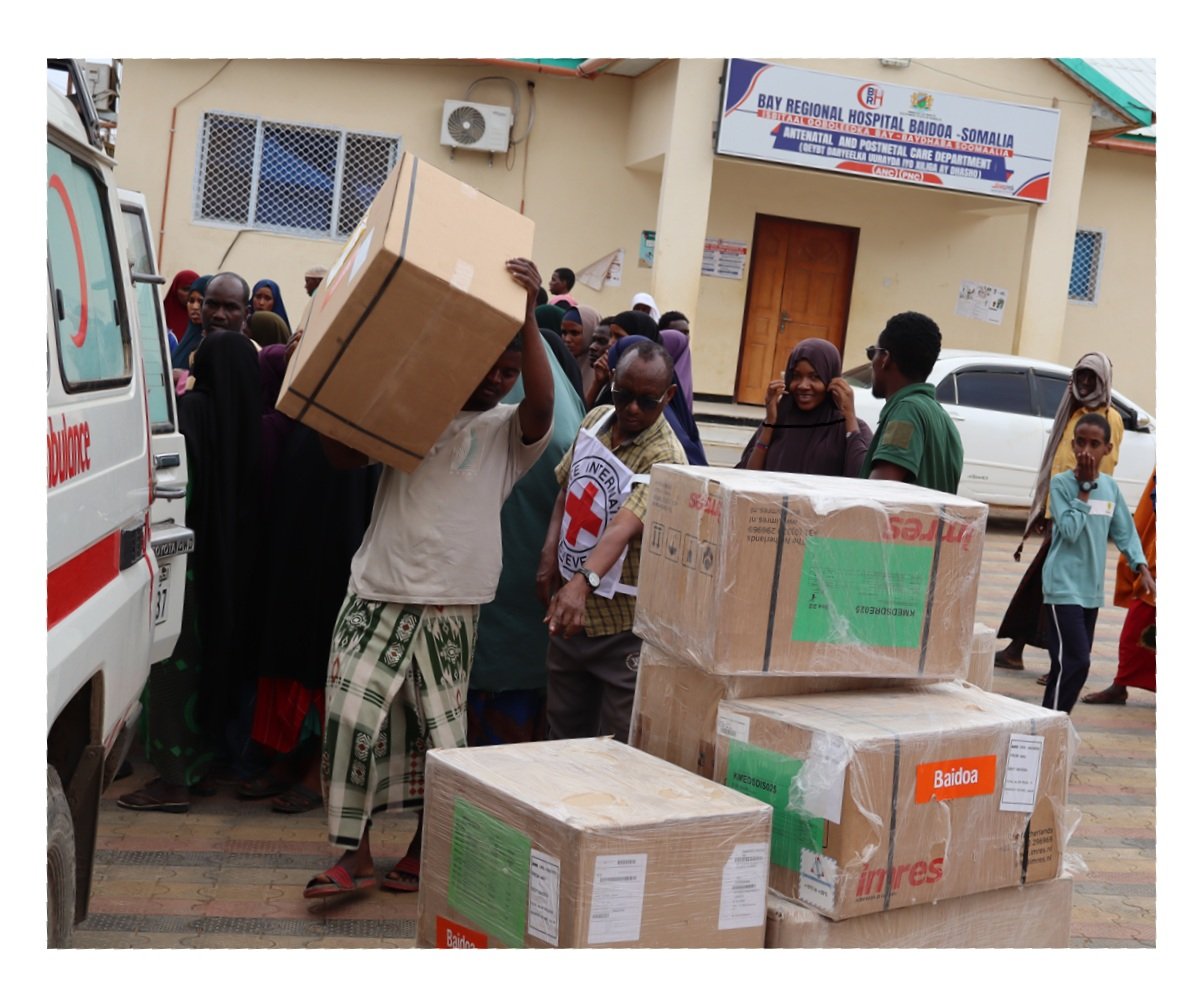
- Medical support: Over 500 wounded patients were transported to Bay Regional Hospital by SRCS volunteer response teams.
- Medical donations: Supplies delivered to Bay Regional Hospital facilitated the treatment of more than 160 patients while additional medical supplies provided to Bayhaw Hospital helped treat 65 patients.
- First aid: Almost 150 persons received first aid from SRCS teams.
- Detention visits: ICRC teams visited persons detained in relation to the fighting in Baidoa Central Prison.
- Cash support: Close to 2,000 displaced families in Awdiinle were supported with cash to help families buy necessities such as food.
- Reconnecting families: More than 4,000 free phone calls were provided to conflict-displaced people looking for their missing loved ones.
- Respectful handling of the dead: 27 participants from the medical field, including SRCS staff, were trained on management of the dead.
- International humanitarian law (IHL): 300 weapon-bearers in Baidoa and Xudur were trained on IHL principles.
- Flood preparedness (ongoing):
- 10,500 sandbags have been distributed to SRCS clinics in Berdale, Xudur and Wajid.
- Relief items including tarpaulins, mosquito nets and hygiene items have been prepositioned and some distributed at Baidoa Central Prison.
- 14 water points have been flood-proofed to protect against the impact of anticipated heavy rains.

